


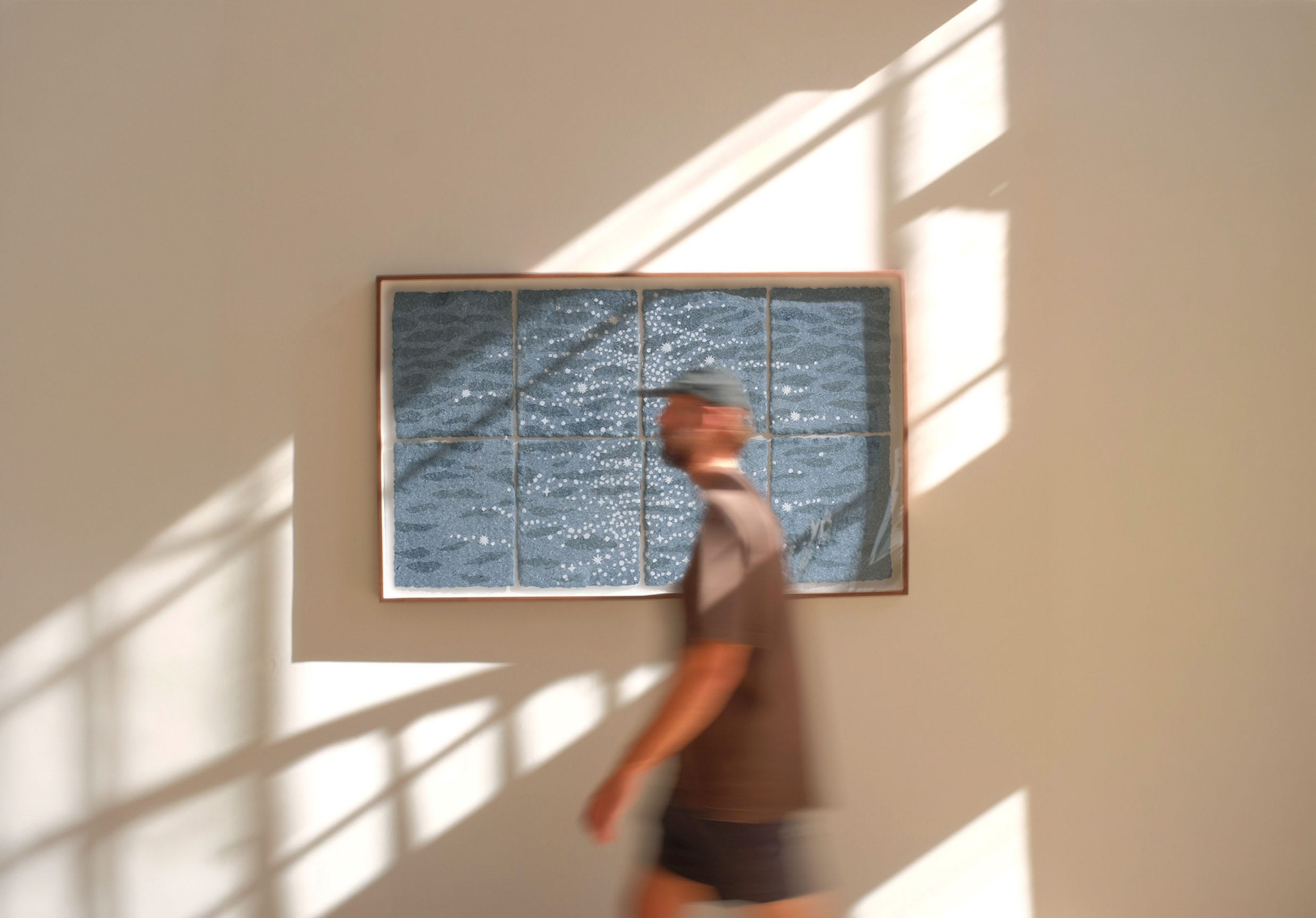
The past year or so I’ve been working on a project titled Watershed. Part fine art endeavor, part social practice, it’s been a joyful, and at times, totally humbling tangle of experimentation… the arc of which has encompassed youth workshops, a papermaking event, and a collection of pulp paintings, all rooted in the process of making art from recycled clothing. I’ve been exceptionally slow to share work in recent years, but it’s finally dawning on me that when your practice contains a social element, sharing the art is part of the art itself…right?! So in the spirit of sharing and letting things flow, here are some notes on Watershed. Thanks for tuning in.
Context:
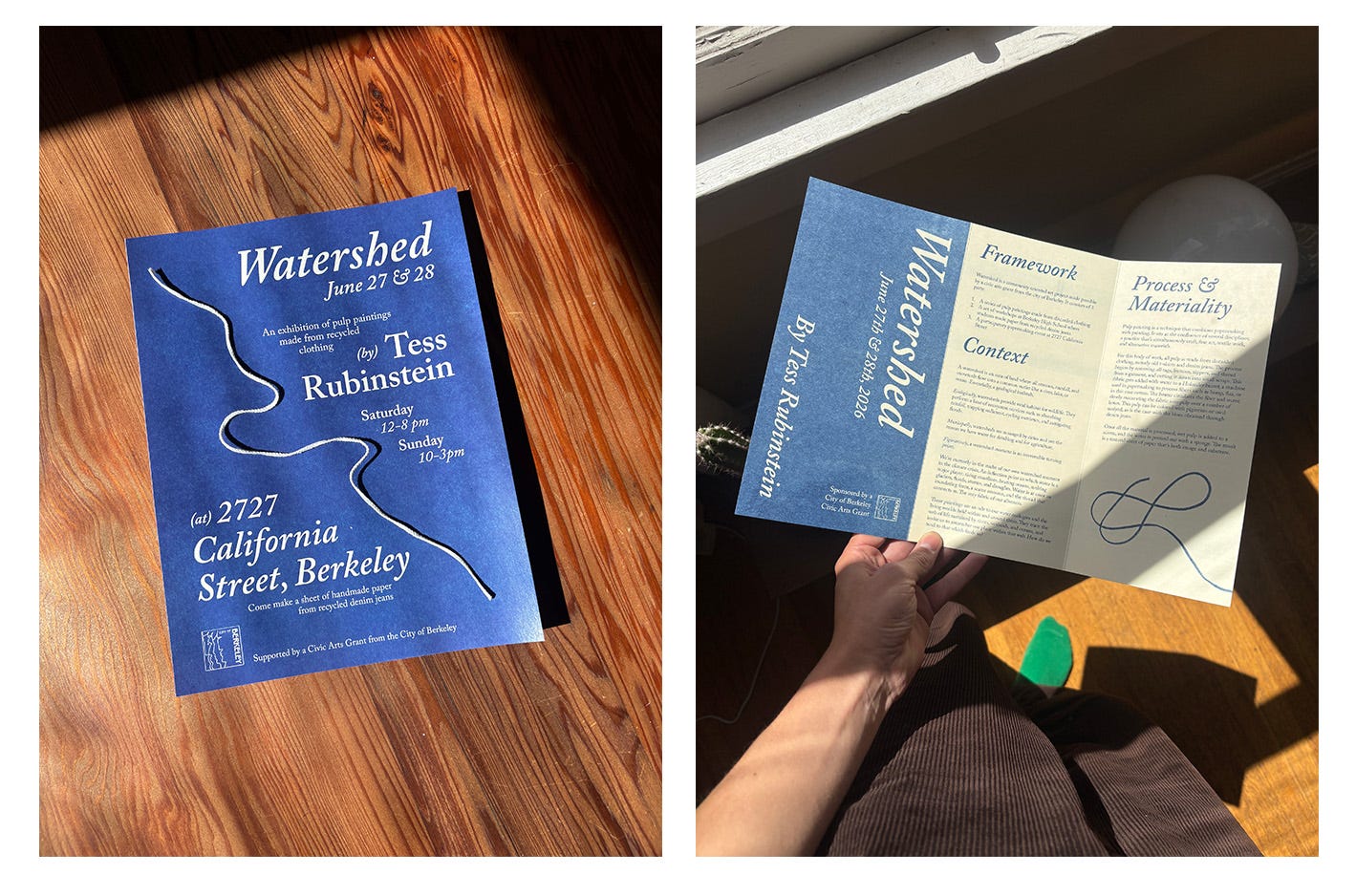
Watershed is a community-oriented art project supported by a civic arts grant from the City of Berkeley. It consists of three parts:
1) A series of pulp paintings made from recycled t-shirts and jeans.
2) A set of papermaking workshops at Berkeley High School.
3) A participatory papermaking event at 2727 California Street in Berkeley.
What’s a watershed?
Ecologically, a watershed is an area of land where all streams, rainfall, and snowmelt flow into a common outlet such as a lake or ocean. Essentially, a geological bathtub. This bathtub can be small and localized, like the basin of a stream, or encompass a vast river network like the Mississippi River Basin. Watersheds offer vital habitat for wildlife and provide a host of ecosystem services such as absorbing rainfall, trapping sediment, and cycling nutrients.
Municipally, watersheds are managed by cities and are essential to the availability and quality of our water supply for drinking and for agriculture. Watersheds shape the flow of stormwater, and when managed well in the urban landscape, can help mitigate floods and reduce water pollution.
Figuratively, a watershed moment is an irreversible turning point. A critical moment in time that marks a fundamental change or paradigm shift. We’re currently in the midst of a watershed moment in the climate crisis where water is a major player: rising coastlines, heating oceans, melting glaciers, floods, storms, and droughts. Water is at once an inundating force, a scarce resource, and the thread that connects us. The very fabric of our aliveness.
This project sits at the confluence of the natural world and our material one. An ode to the living worlds held within and around our water systems, and an invitation to remember our place within that world. How do we honor the beauty and intelligence of our entangled ecologies while reckoning with the harms that we’re actively inflicting on them? How do we tend to that which feeds us?
Process and Materiality:
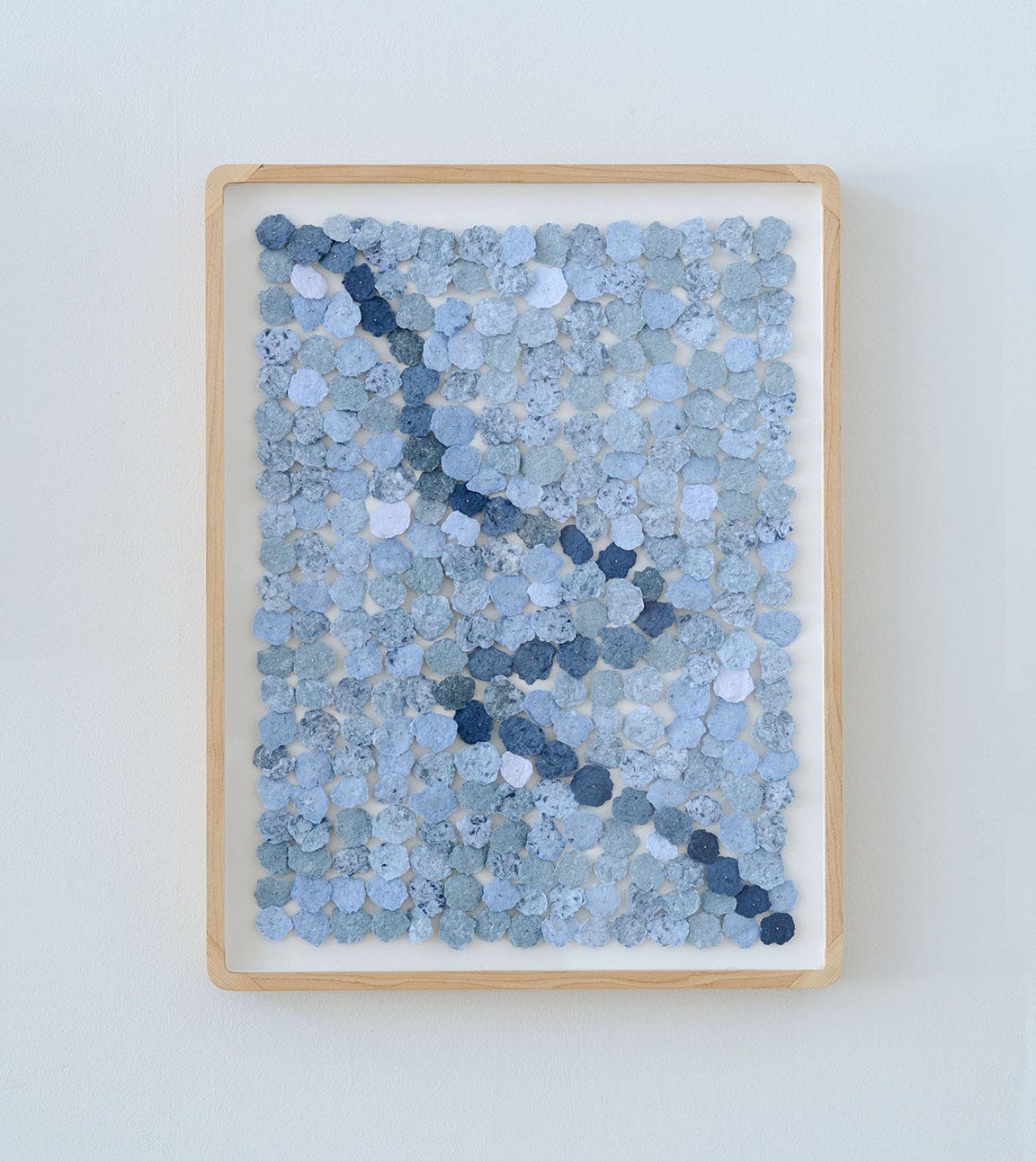
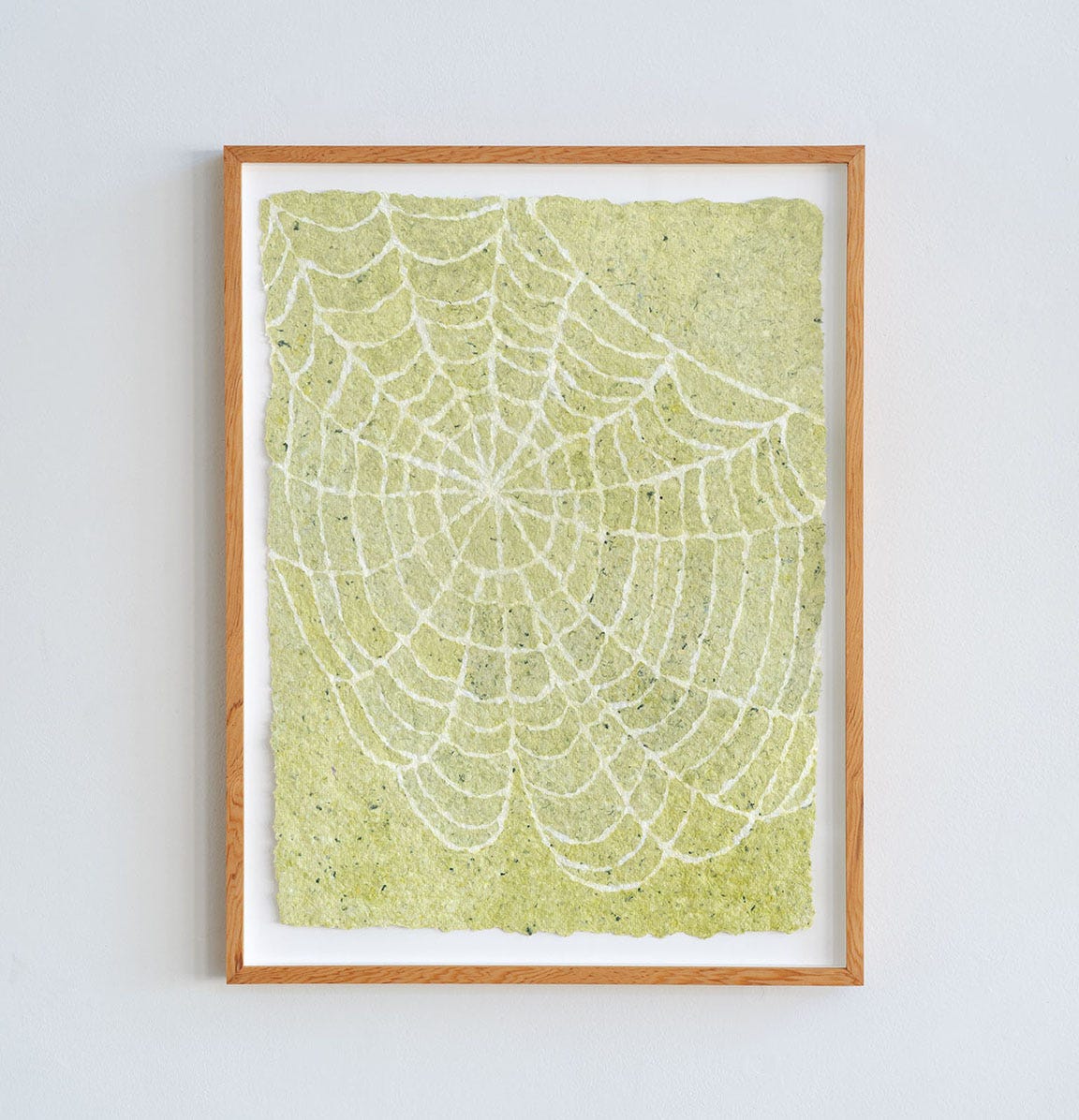
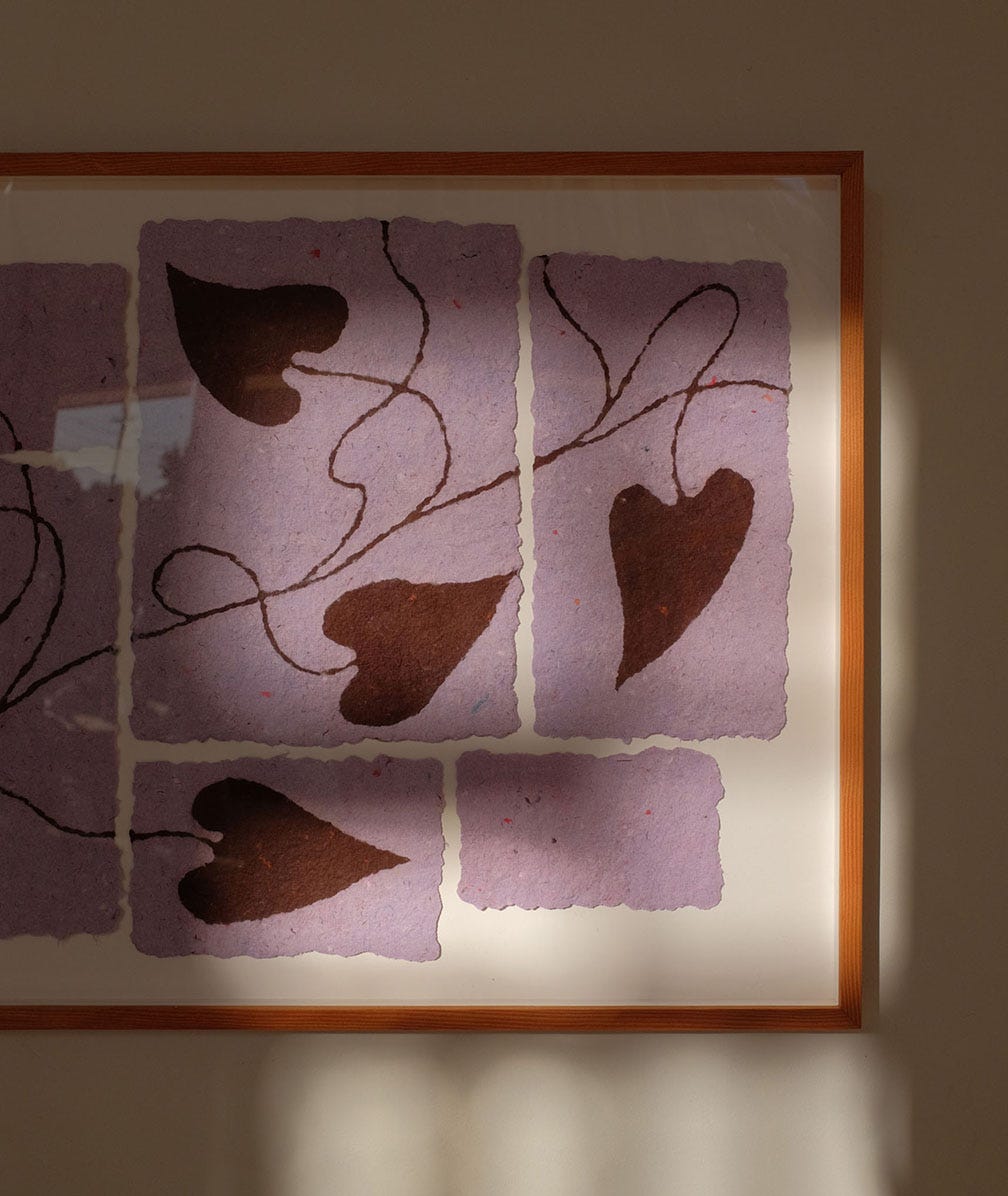
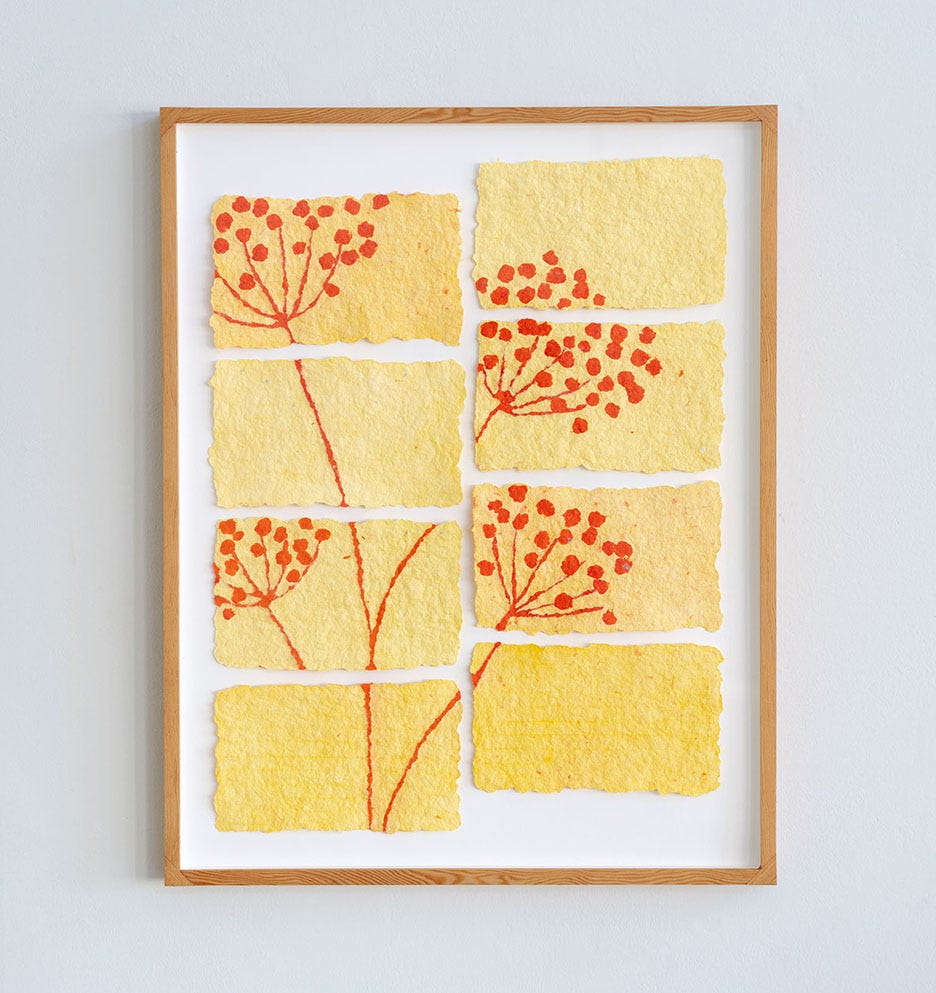
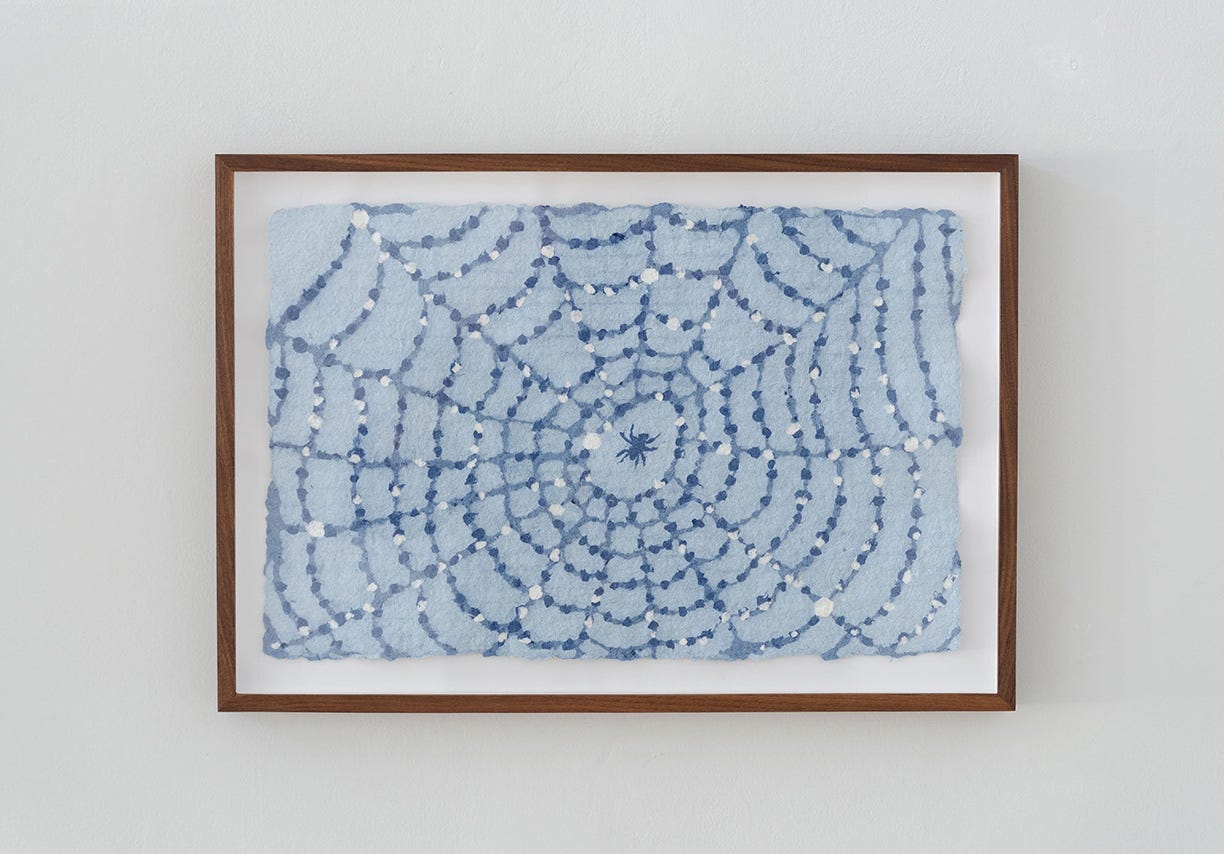
Pulp painting is a technique that combines paper making with painting; a practice that’s simultaneously craft, fine art, textiles, and alternative materials. For this collection of work, all pulp was made from discarded t-shirts and denim jeans collected from friends and family.
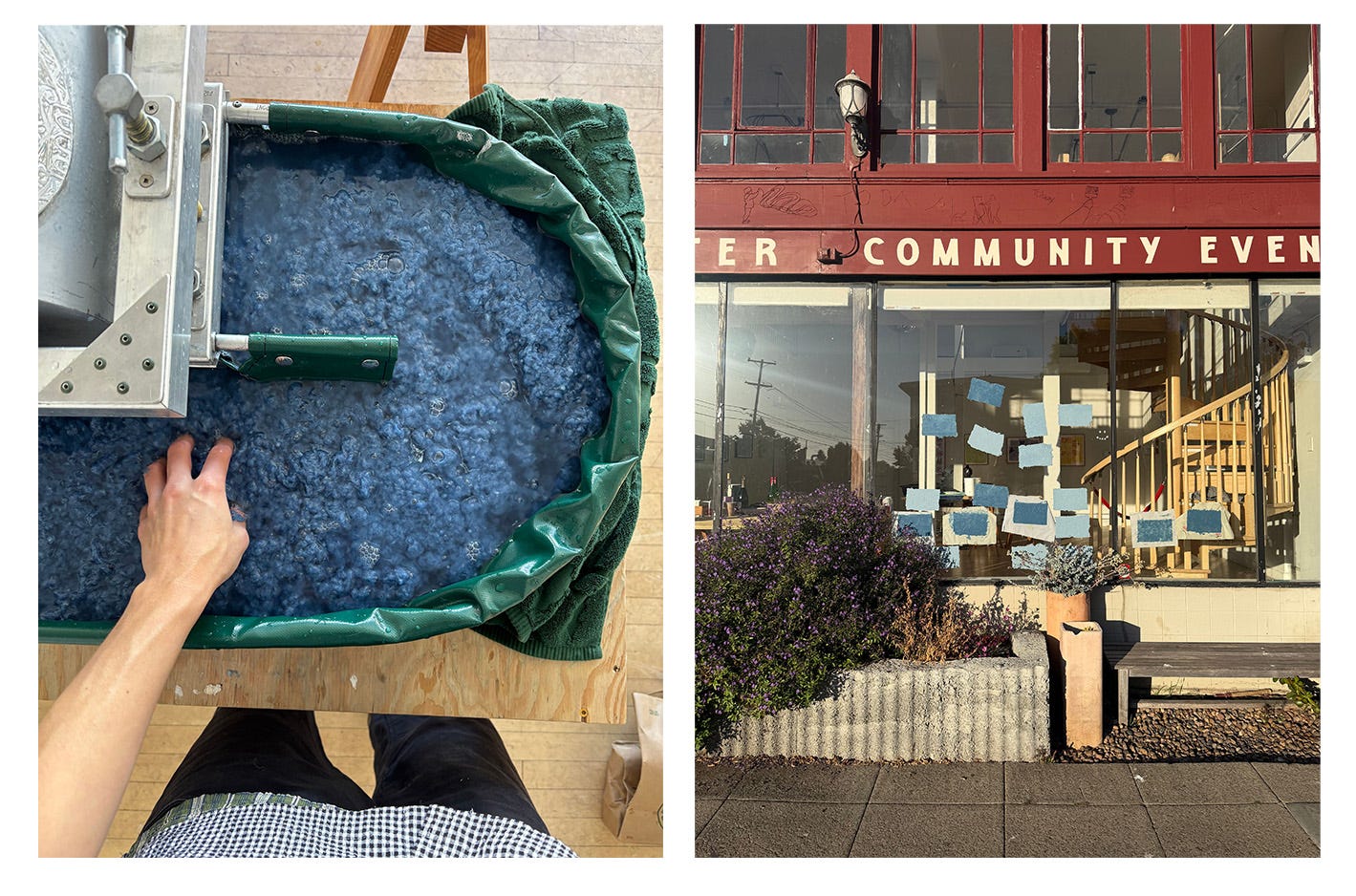
The process begins by removing tags, buttons, zippers, and thread from a garment, and cutting it down into small scraps. This fabric gets added with water to a Hollander beater, a machine used in papermaking to process fibers such as hemp, flax, or in this case, cotton. The beater slowly circulates the fiber and water, macerating the fabric into pulp over a number of hours. This pulp can be colored with pigments or used undyed, as is the case with the blues obtained through denim jeans. Once all the material is processed, wet pulp is added to a screen, and the water is pressed out with a sponge. The result is a textural sheet of paper that’s both image and substrate.
Why Clothing?
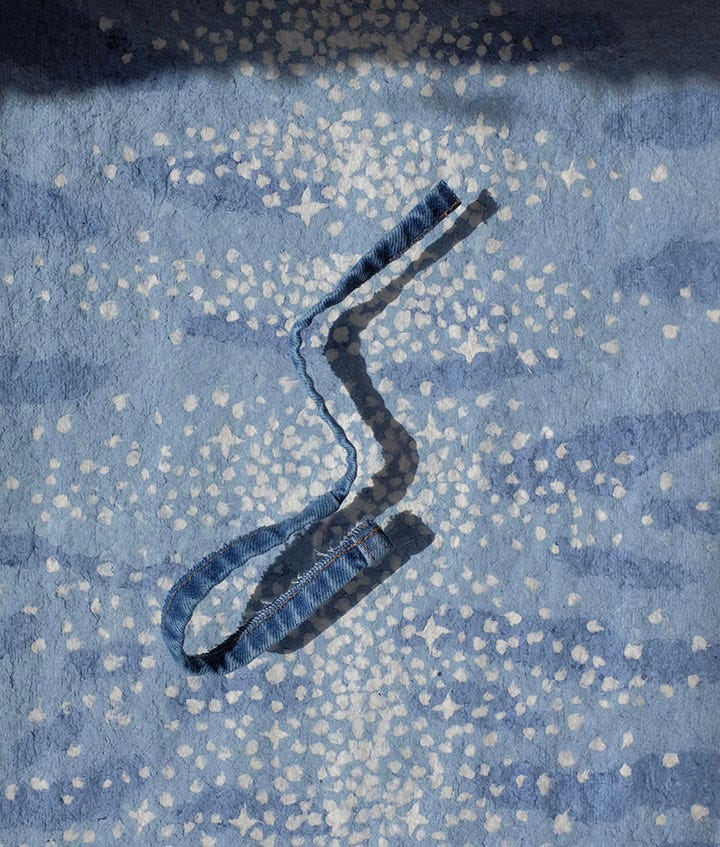
The fashion industry is one of the largest consumers of fresh water on the planet. A single pair of jeans uses an estimated 2,000 gallons of water to produce (WWF). That’s about a decade of drinking water for one person. And when you scale that to an industry producing billions of garments annually, the impact is staggering.
At the beginning of the supply chain, conventional cotton occupies roughly 2.5% of the world’s cultivated land, but is responsible for a disproportionate share of pesticide and insecticide use, a chemical load that poisons the rivers, groundwater, and drinking water of local communities (WWF). Dyeing and treatment alone create an estimated 20% of the world’s industrial wastewater, a process that involves thousands of synthetic chemicals laced with heavy metals (UNEP). And nearly two-thirds of all our clothing is made with synthetic fabrics derived from petroleum (Ellen MacArthur Foundation). These garments can shed hundreds of thousands of microplastic particles every time we wash them, contributing an estimated 200,000-500,000 tons of plastic to the marine environment every year (EEA). These particles have been detected in our blood, brain tissue, and even breast milk. Many of these garments are also treated with PFAS, aka “forever chemicals,” to repel moisture and stains. As the name suggests, these chemicals never break down, and have been linked to a host of health effects including cancer, hormone disruption, and immune suppression (OECD).
At the “end” of a garment’s life, only a fraction of donated clothing is actually resold locally, while the bulk is exported. Much of our used clothing here in the US is shipped to the Global South, with an estimated 85% of post-consumer textiles ending up in landfills or incinerated every year, as seen in places such as Ghana’s Kantamanto Market and Chile’s Atacama Desert (Ellen MacArthur Foundation). At every stage, the burden of our fashion industry falls on the communities that grow the cotton, produce the garments, and receive the waste. There are an estimated 90 million people working in the global textile supply chain, with only a small fraction earning a living wage. About 60-80% of these workers are women (ILO).
Tangibility
There’s a meme that resurfaces with every round of natural disaster: the one about how climate change manifests as a series of calamities viewed through our phone screens until one day, you’re the one filming it. Unless the water is seeping through your door or the smoke is blotting out the sun, the climate crisis functions in abstraction. The scale is so vast, the damage so often elsewhere, and the threats like air and water pollution are often imperceptible to the naked eye. It’s this abstraction that obscures the scope of what’s happening to our Earth and how best to engage in acts of resistance and repair.
I see tangibility as an antidote to this abstraction. A way to physically grasp an idea, rather than merely conceptualizing it. Engaging our sense in order to form an embodied understanding. Because what we can’t see or feel, we can’t understand. And what we can’t understand, we can’t change.
Papermaking is certainly not the answer to the climate crisis, but it’s one small way to engage in a tangible, transformative process. To take something discarded and imbue it with new life, shifting our expectations around value and waste. I believe that the physical process of transmuting trash into art also permits an emotional processing. A way to grasp the contours of our climate grief, acknowledging the harms while moving through something felt, actionable, and creative. I’ve found that this process of material renewal can open a discussion around climate that’s rooted in action and empowerment, rather than guilt and overwhelm. A space for grief and hope to coexist.
For this body of work, the relationship between subject matter and materiality sits within this tension: between grief and hope, beauty and degradation, extraction and renewal. A glimpse at the duality of experience within our current watershed moment. The ache of existing within our broken systems, and the ways in which life is persistently, unfathomably, still so beautiful…
The gasp of color in a sunset during wildfire season.
The grace of an egret perched along the interstate.
The pleasure of a warm night meeting your skin amidst a record-breaking heat wave.
In Practice
This March, I got to host a set of workshops at Berkeley High School for the junior and senior art classes. Students made paper from denim jeans, and we used the papermaking process to ask:
What does a sustainable art practice look like?
What’s the role of the artist in the climate crisis?
How can art and fashion be a vehicle for change?
Mutability
As I made art from trash with local students and community members, I got to dream of a different type of watershed moment. One in which we feel galvanized by beauty and purpose. Where our experience of the natural world shifts from passive to active; not a resource to extract but a teacher with agency and intelligence.
When we feel calcified in fear and despair, water can teach us about mutability. How even the most entrenched institutions can be washed away, eroded through collective action. Maybe the change we need won’t trickle down through our existing system, but rise through an upwelling of creativity, culture, and connection. Other mutable forces that can shift our perception of power.
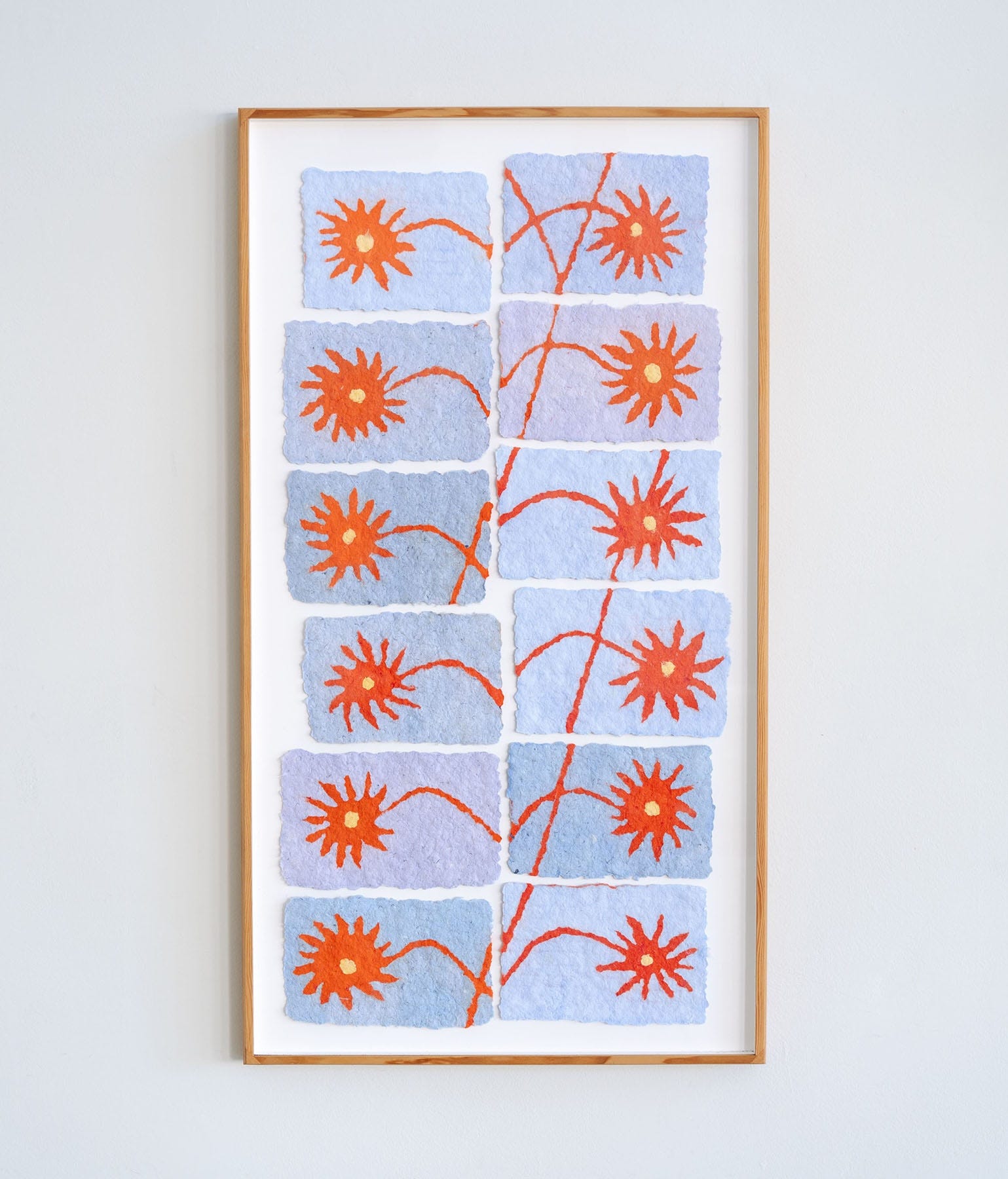
Like so many things in the natural world, water moves in cycles. It circulates through our landscapes, oceans, and skies, even our bodies. A reminder that just like rivers and clouds, we are in and of the Earth. An interconnected system of tributaries and arteries. The more we can learn from this circularity and integrate its logic into our systems, the less harm we inflict on the Earth and ourselves in the process.
After all, we’re bodies of water too.
Tess
If you’d like to a see a price list for Watershed, click here to send me your email and I’ll beam one your way :)
All artwork © Tess Rubinstein 2026